Cat Jump: Cute Pet Music Game
- 4.2
- Rating
- 1.00M
- Installs
- Free
- Price
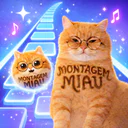
 Analysis by App-foxy
Cat Jump: Cute Pet Music Game is the kind of mobile game I can open for a few minutes and understand immediately. The central idea is simple: guide a bouncing kitty ball across colored tiles while music drives the action, then collect charming singing animals along the way. That clarity is a real strength. I do not need a long tutorial or a complicated menu system before I can start playing, and the bright presentation makes the first session feel friendly rather than demanding.
What surprised me is how much of the experience depends on mood. This is not trying to be a serious rhythm-training tool or a deep platform adventure. It is a light music game built around cute visual feedback, quick reactions, and the pleasant feeling of keeping a run alive. The best way to approach it is as a small, colorful break: something to play between tasks, during a commute, or when I want sound and movement without committing to a long session.
Developed by NekoBeat Studio: Cozy Cats & Cute Music Games, the game is free and aimed at Everyone. It has reached over 500 thousand installs, with an average rating of 4.1 from roughly 500 ratings. Those figures suggest a healthy audience for its particular blend of cats, music, and accessible tapping, while also leaving room for a few rough edges that become more noticeable after the novelty of the first play fades.
You May Also Like

 Blood Strike: 2.5 Anniversary
Blood Strike’s Loadouts Turn Every Drop Into a Tactical Gamble
A close look at Blood Strike’s custom loadouts: how fast access to signature weapons reshapes its battle royale rhythm, rewards preparation, and narrows the gap between fights.

 Pandora - Music & Podcasts
Pandora’s Music Is Easy to Start, but Harder to Recover
Pandora’s strength is its low-effort path from a seed to a station. Its weak spot is how much confidence it asks you to place in connection, setup, and quiet recovery.

 8 Ball Pool
 Is Built on Rivalries, Rematches, and Routine
A close look at the rivalries, rematches, shared routines, and unanswered safety questions that turn a quick pool match into a persistent mobile community.

 Samsung Music
’s Quiet Strength Is Playing What You Already Own
Its reach comes less from spectacle than from dependable access to a personal library. That simplicity is both the app’s strongest retention engine and its ceiling.

 AccuWeather: Weather Radar
AccuWeather Review: A Quick, Clear Forecast for Everyday Decisions
For everyday plans, the best forecast is the one you can understand quickly. AccuWeather makes rain timing, radar, and local conditions easy to act on, with a few trade-offs.

 Hill Climb Racing
Why Hill Climb Racing Still Turns Crashes Into One More Run
A tiny car, a bumpy hill and one more upgrade: Hill Climb Racing keeps resurfacing because its simple chaos makes every near-miss feel personal.
More From Our News Desk
View All News


How the first few minutes establish the game’s mood
The opening impression comes from the combination of a bouncing character, strongly separated tile colors, and a playful animal theme. Even before I think about performance, the screen communicates what kind of game this is. It wants me to react quickly, but it also wants me to smile. The visual language is soft and approachable rather than intense, which makes the game easier to recommend to younger players and to adults who prefer casual games without aggressive presentation.
The tile path gives the action a useful visual anchor. Instead of asking me to watch a busy battlefield or memorize a large level, it focuses attention on the next landing area. That narrow focus is important on a phone, where a crowded interface can make rhythm play feel tiring. Here, the colored surfaces help separate the immediate decision from the decorative parts of the scene.
My first practical tip is to treat the opening attempts as timing calibration rather than as a test of skill. I found it more useful to watch how the kitty ball moves in relation to the beat than to chase a perfect run immediately. Once that relationship becomes familiar, the controls feel less like random tapping and more like a visual-musical conversation. This is especially helpful for players who normally avoid rhythm games because they expect them to be difficult from the start.
The free entry point also suits the game’s structure. I can try it without turning the decision into a purchase, and the age rating makes it a natural choice for a shared family device. Still, “easy to start” should not be confused with “equally satisfying for everyone.” Players who want a long narrative, character development, or a large strategic system may find the first impression pleasant but too lightweight.
A visual world built from color, animals, and movement
The setting is not presented as a large fictional universe with extensive lore. Instead, the world is expressed through its repeated visual cues: cute pets, bright tiles, a bouncing central figure, and the promise of singing animal companions. That restraint works in the game’s favor. The art direction does not compete with the playable path, so the screen remains readable while still feeling more personal than a plain sequence of notes.
The animal collection gives the action an emotional layer. A successful run is not only about staying on the tiles; it also feels like progress toward a more lively cast. I like that this creates a small reason to continue without turning the game into a checklist-heavy management experience. The singing animals are particularly important to the identity of the title because they connect the collection idea directly to the music category.
One subtle strength is the way the cute style lowers the emotional cost of failure. In a darker or more competitive rhythm game, missing a sequence can feel like a sharp interruption. Here, the soft animal theme makes restarting easier to accept. That makes the game suitable for short, repeated attempts, especially when I am playing with only a few minutes available.
There is also a trade-off in this approach. A highly focused cute style can become repetitive for players who need constant visual change. If you usually choose music games for dramatic stages, detailed environments, or a strong sense of progression, the restrained setting may feel more like a pleasant wrapper around the mechanic than a world you want to explore.
Why the sound matters more than the decoration
Music is not just background here; it is the organizing principle for the movement. The store presentation frames the game around current hits, and that gives each attempt a recognizable pulse rather than making the player react to silent visual prompts. I found that the sound helps turn a series of jumps into a rhythm activity, even when the underlying interaction remains simple.
The most useful way to play is to divide attention between the next colored tile and the beat. Watching only the character can make the action feel late, while listening without checking the path can lead to a mistimed landing. The game works best when sight and sound share responsibility: the color tells me where to focus, and the music helps me anticipate when the next decision should happen.
That balance also explains why headphones can improve the experience, even though the game is casual. A clearer beat makes it easier to notice the timing relationship, particularly in a noisy room. I would not describe this as a replacement for a dedicated rhythm game, because its appeal is broader and more relaxed, but the audio gives the bouncing mechanic a purpose beyond simple reflex testing.
There is a practical limitation for people who prefer to play silently. Without the musical layer, the game’s identity becomes less distinctive, and the timing may feel more dependent on visual prediction. I would choose it over a conventional endless jumper when I want a soundtrack-led mood, but I would choose a more advanced rhythm title when precise musical input, complex patterns, or deeper song interaction is my main goal.
Where the rhythm and the jumping fit together
The core mechanic succeeds because it is easy to explain and quick to repeat. I guide the kitty ball over colored tiles, following the flow of the music and trying to keep the sequence going. That simplicity makes the game approachable, but it also means the quality of the timing relationship matters enormously. If the visual movement and the music feel aligned, even a short attempt has energy. If I lose that connection, the action can feel like ordinary tapping with a soundtrack attached.
My second non-obvious tip is to keep the phone at a comfortable viewing angle and avoid playing while walking. The game asks for enough visual concentration that small changes in how I hold the device can affect how quickly I read the next tile. It is not a demanding setup, but a stable grip makes the experience more consistent than trying to play one-handed while distracted.
The game is also better suited to short sessions than to uninterrupted marathon play. Repeated attempts can be satisfying because each run invites me to improve timing, but the basic interaction does not offer the same variety as a full rhythm library or a platform game with multiple systems. I see the strongest use case as a five-minute reset: play, listen, collect a little progress, and stop before the repetition becomes obvious.
For children, the accessible structure is a major advantage. The colorful tiles provide a clear target, the animal theme is inviting, and the Everyone rating makes the game broadly suitable. I would still encourage an adult to try it first if the child is sensitive to fast movement or sound, not because the concept is intimidating, but because each player’s comfort with rhythm-based reactions is different.
For adults, the appeal depends on expectations. If I want a gentle mobile distraction with a musical pulse, it works well. If I want a game that rewards long-term planning, deep customization, or a demanding competitive ladder, this is not the right destination. Its charm comes from immediacy, not complexity.
Collection gives the runs a little more purpose
The singing animals are more than a decorative detail because they give the player a reason to care about continuing. Collecting them changes the emotional texture of a run: I am not only trying to avoid a mistake, I am also building a cuter musical group. That is a smart fit for the theme, since the reward belongs to the same world as the soundtrack and the bouncing character.
My third practical insight is to use collection as a pacing tool rather than as a reason to force endless retries. When I focused too heavily on obtaining everything in one sitting, the relaxed mood became more pressurized. The game feels better when I let the animals provide a gentle long-term goal while keeping individual attempts light. That approach makes the title more welcoming for casual players who do not want every session to become a performance test.
The collection idea also helps distinguish this game from a plain music player or a standard jumping game. A music player offers better control over listening, while a conventional jumper may offer more obstacle variety. This title sits between those alternatives: the songs create the atmosphere, the tiles create the immediate challenge, and the animals give the repeated play a recognizable identity.
At the same time, players should not expect the collection layer alone to transform the game into a large progression adventure. Its role is supportive. It adds motivation and personality, but the central pleasure still comes from matching movement to music. If that basic loop does not appeal to you, collecting cute companions will probably not be enough to sustain interest for very long.
Everyday use and the kind of player who should skip it
I can easily imagine opening this during a short break after a long stretch of work. I would put on headphones, play a handful of attempts, and use the beat to shift attention away from email or a crowded to-do list. The short-loop design is useful in that situation because I do not need to remember a complicated plot or rebuild a strategy after closing the app.
It also suits a parent and child sharing a phone for a few minutes. One person can watch the colors and rhythm while the other offers suggestions, and the animal theme gives both players something to talk about. That said, the game is less suitable for a group looking for a party experience, because the interaction is centered on one player’s timing rather than broad multiplayer participation.
I would skip it if I am searching for a serious musical practice tool. The presence of songs and rhythm does not automatically make a game useful for learning an instrument or improving formal music skills. I would also skip it if I dislike cute aesthetics, repeated short runs, or mechanics that remain intentionally simple after the first session.
Compared with the usual alternatives, its strongest advantage is the blend of approachable rhythm, pet collecting, and a visually clear path. A traditional rhythm game may offer more demanding patterns and a wider sense of musical mastery. An endless runner may provide faster movement and more obstacle variety. A relaxing pet game may offer more interaction with animals but less timing-based play. Cat Jump occupies a narrow but appealing middle ground, and it works best when that exact combination is what I want.
Device expectations and current build
The game supports Android devices starting with version 7.0, which keeps it accessible to people using older compatible phones. That matters for a casual title because its audience may include family devices or secondary phones rather than only recent hardware. I would still keep the screen clean and the device comfortably charged for longer sessions, since rhythm-based play is more enjoyable when the phone is responsive and easy to see.
The current version is 1.4.5. I see that as a useful detail for anyone comparing experiences across devices: checking that the installed version is current can prevent confusion if the interface or feel differs from an older build. Since the game depends on timing, even small changes in responsiveness or presentation can affect how a player judges the experience.
The free price makes experimentation straightforward. I can install it, test the rhythm, and decide quickly whether the cute presentation matches my taste without planning around a purchase. The more important question is not cost but attention: the game asks for repeated focus, and its value comes from whether that small loop feels pleasant enough to revisit.
My atmosphere verdict after looking beyond the first novelty
What holds the experience together is the agreement between its parts. The art direction makes the bouncing character and colored tiles feel friendly. The animals give the music a playful personality. The rhythm supplies movement with a sense of timing. The simple mechanic keeps the mood accessible instead of turning every attempt into a demanding examination.
That coherence is also why the limitations are easy to identify. The game does not hide its narrow focus, and players who need deep systems or substantial variety may outgrow it. Its pacing is strongest in short bursts, its visual language is deliberately cute, and its musical interaction is more about accessible timing than technical mastery. Those are not flaws for the intended audience, but they are meaningful boundaries.
My recommendation is to try it when you want a cheerful, music-led break rather than a full-scale rhythm challenge. I would suggest it to families, casual players, and anyone who enjoys collecting friendly characters while following a clear beat. I would point a dedicated rhythm fan toward a deeper alternative, and I would steer story-focused players toward a game with a richer setting.
After reaching over 500 thousand installs, it has clearly found people who enjoy this compact formula. My own final impression is that the title succeeds less through mechanical ambition than through consistency: the colors, sounds, animals, and pacing all support the same relaxed idea. Cat Jump: Cute Pet Music Game is at its best when I let it remain small, bright, and easy to return to.
For a free music game with an Everyone rating, a 4.1 average, and a friendly identity from NekoBeat Studio: Cozy Cats & Cute Music Games, that is a worthwhile result. I would not install it expecting a huge adventure. I would install it expecting a few minutes of rhythmic jumping, cute singing companions, and a mood that can make an ordinary break feel more playful.
FAQs for Cat Jump: Cute Pet Music Game
01What is Cat Jump: Cute Pet Music Game all about?
Cat Jump: Cute Pet Music Game is a rhythm-based game where players guide a cute cat through various musical challenges. The game combines elements of platform jumping with engaging musical tracks, creating an immersive experience where timing and rhythm are key. It's a delightful blend of music and gameplay that appeals to both casual and avid gamers.
02Is Cat Jump: Cute Pet Music Game suitable for children?
Yes, Cat Jump: Cute Pet Music Game is designed to be family-friendly and is suitable for children. The game features adorable graphics, simple controls, and fun music tracks that appeal to all age groups. However, parents should be aware of any in-app purchases to ensure they are appropriate for their children.
03Does Cat Jump: Cute Pet Music Game require an internet connection?
Cat Jump: Cute Pet Music Game can be played offline, which makes it perfect for on-the-go entertainment. However, an internet connection may be required to access additional features, updates, or to participate in online events and leaderboards. This flexibility allows for uninterrupted gameplay anywhere.
04Are there in-app purchases in Cat Jump: Cute Pet Music Game?
Yes, Cat Jump: Cute Pet Music Game includes in-app purchases. These can range from cosmetic items to enhance your cat's appearance, to additional music tracks and levels. While the game is free to download, players have the option to purchase these extras to enhance their gaming experience.
05How can I improve my skills in Cat Jump: Cute Pet Music Game?
Improving your skills in Cat Jump: Cute Pet Music Game requires practice and rhythm awareness. Players should focus on timing their jumps accurately to the beat of the music. Utilizing practice modes, if available, can help you get familiar with different tracks. Engaging with the community for tips and watching gameplay videos can also provide valuable insights.
Pros
- Adorable graphics enhance user experience.
- Simple controls make it easy to play.
- Engaging music keeps gameplay lively.
- Variety of levels adds replay value.
- Smooth performance without lags.
Cons
- Limited customization options for characters.
- In-app purchases can be pricey.
- Ads can interrupt gameplay.
- Requires internet for some features.
- Game can get repetitive over time.

Cat Jump: Cute Pet Music Game
Gallery